
Operators
Ready-to-operate systems built for profitability, for private operators
For a private operator, the question isn't whether the technology works, it's how much each vehicle earns per month and how quickly the system can be replicated in another city. RÁFAGA delivers the business model, the operating model and the infrastructure calibrated for those two answers.
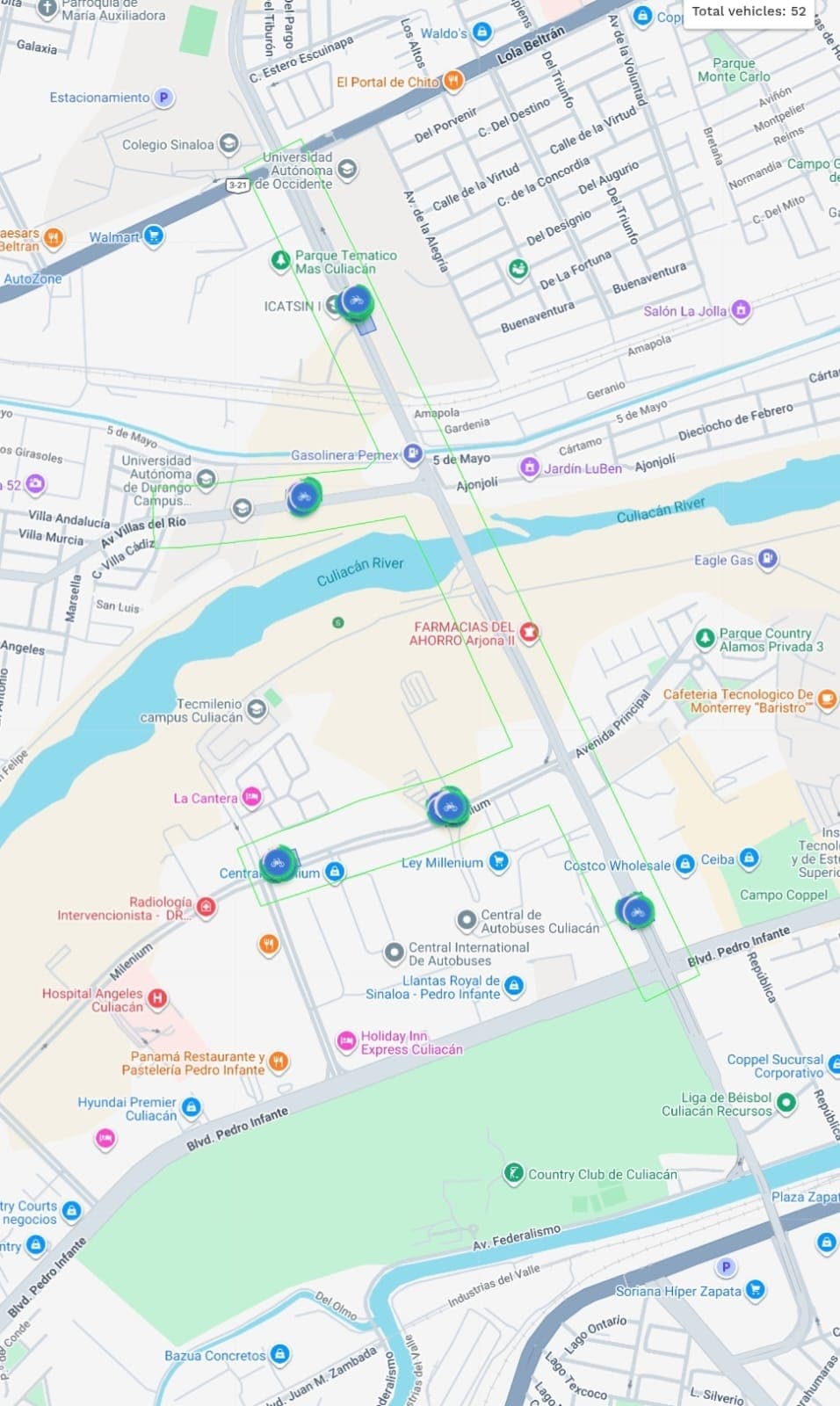
Where an operation's margin gets decided
Three line items account for most of a system's variable operating cost.
| Line item | What drives it | How it's controlled in the design |
|---|---|---|
| Rebalancing | Stations poorly located relative to real demand | Location derived from the pattern study, not space availability |
| Maintenance | Vehicle chosen by purchase price | Selection by lifecycle cost and parts availability |
| User support | Availability and billing failures | Management software and service levels defined from the operating model |
Frequently asked questions
What is the break-even point of a micro-mobility system?
It depends on the revenue mix and the cost per vehicle in operation. It's modeled with conservative and expected scenarios based on projected demand; handing over a single number without that analysis would just be making it up.
Can I start in one city and later replicate the model?
That's exactly the scenario the service is designed for: the operating model and organizational structure are documented to be replicated, and infrastructure is standardized so the second city costs less than the first.
Does RÁFAGA compete with its operator clients?
No. RÁFAGA develops, implements and optimizes systems for third parties; the system's commercial operation stays in the client's hands unless we're hired to support it.
Keep reading
Ready to transform mobility in your city or development?
Tell us the connectivity challenge you're facing and we'll design the turnkey project that solves it.