
Real estate sector
Internal mobility for residential developments and planned communities
In a large residential development, the problem isn't reaching the city, it's moving inside the development itself: from the entrance to the house, from the house to the clubhouse, from the clubhouse to the school. RÁFAGA implements internal micro-mobility systems that solve that trip without adding cars to private roadways.
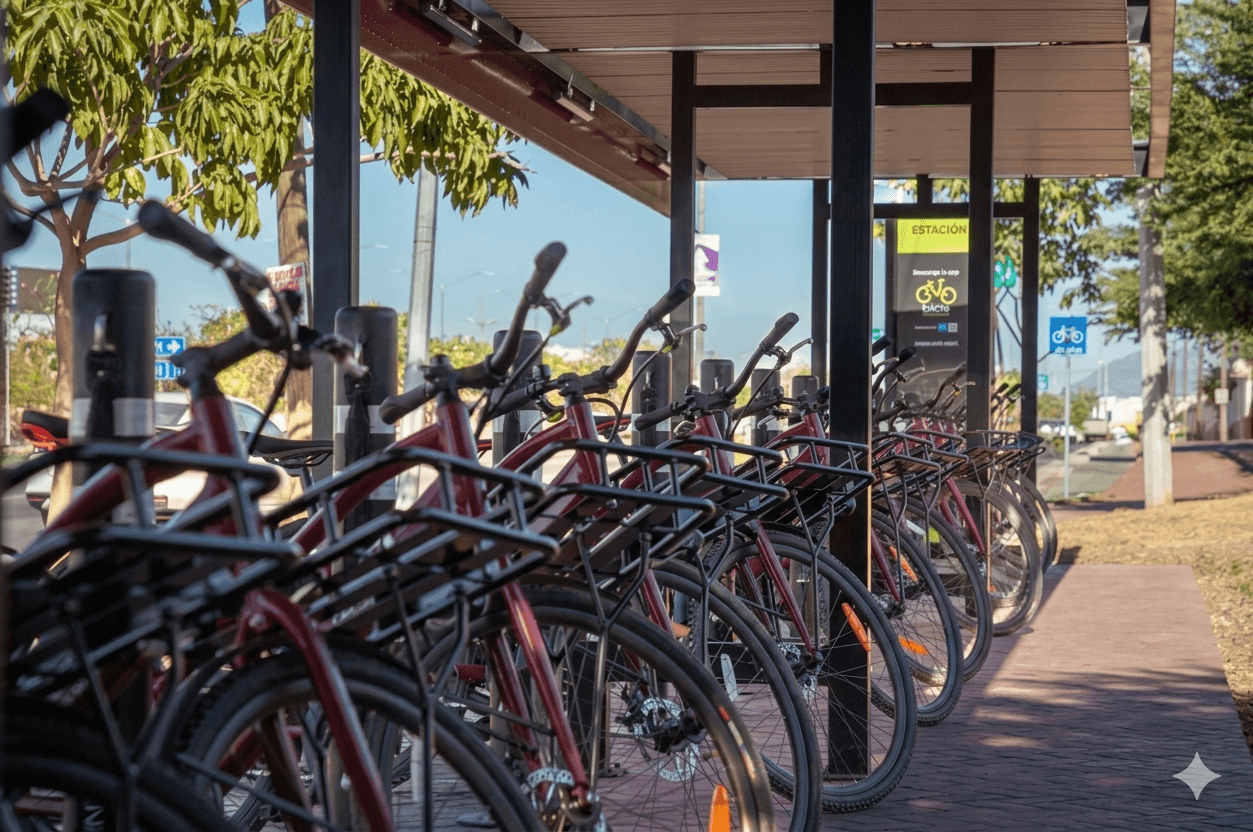
Why a private development is a different case
No public-roadway regulation
Operating on private roadway, the project moves forward without municipal permit timelines.
Bounded, predictable demand
The user universe is known: number of homes, occupancy and amenities. That allows the fleet to be sized with very little margin of error.
Defined recurring revenue
The maintenance fee or membership gives a stable revenue source, without depending on a per-trip fare.
Service level is the product
The resident doesn't compare against another mobility system: they compare against their car. Availability is the metric that decides whether the system gets used.
Frequently asked questions
How many bicycles does a residential development need?
It's calculated using the number of homes, real occupancy, internal distances and trip-attraction points — entrances, clubhouse, school, retail. That calculation is the deliverable of the mobility pattern study.
Who manages the system inside the development?
Usually the condominium administration, trained by RÁFAGA. It can also remain as an operation supported by our team.
Can it be installed in an already-occupied development?
Yes. Station and electrical system installation is planned in stages to avoid disrupting the development's operation.
Keep reading
Ready to transform mobility in your city or development?
Tell us the connectivity challenge you're facing and we'll design the turnkey project that solves it.